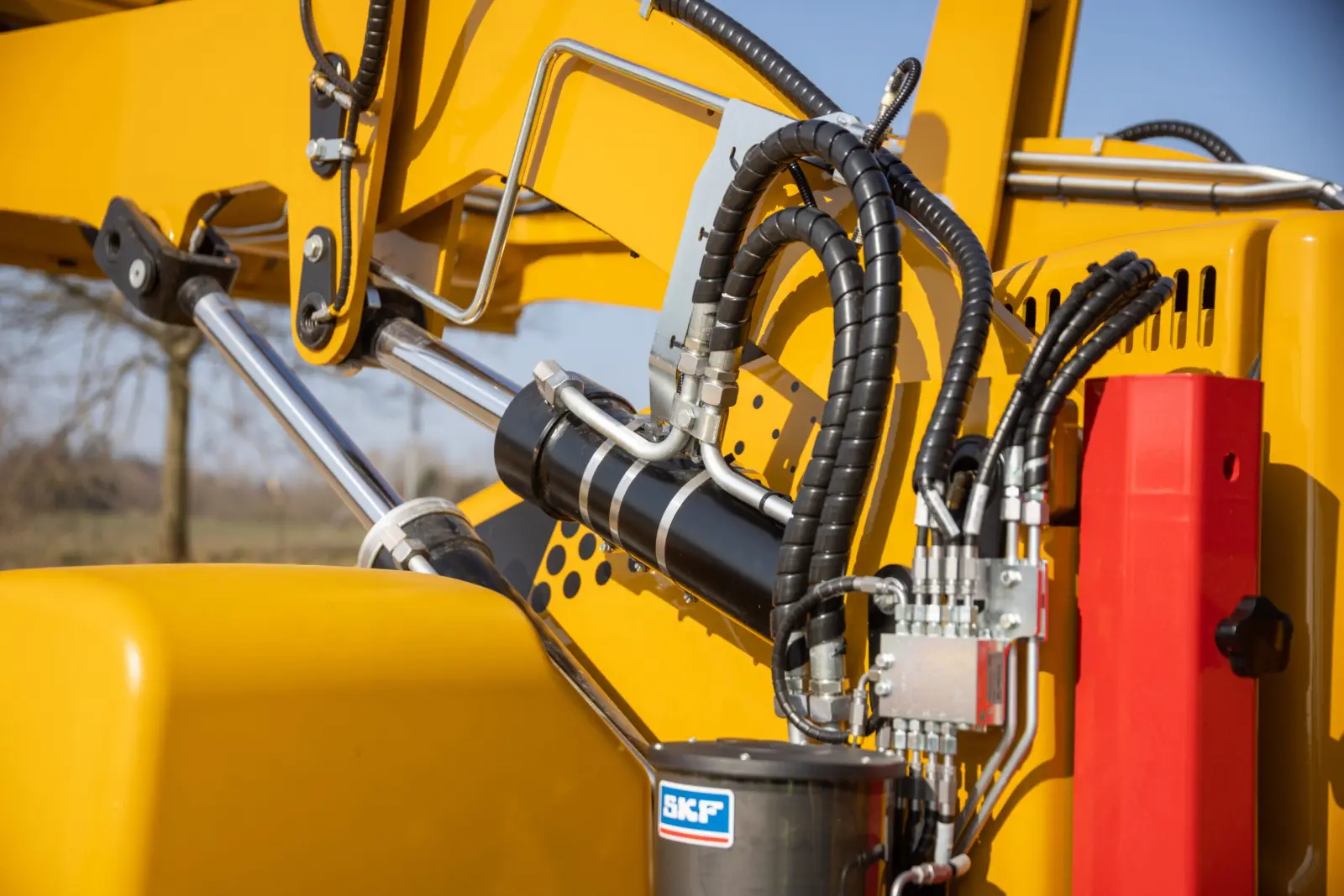
Hydraulics is the use of a pressurised liquid, usually oil, to transmit power and create controlled movement. A pump puts the oil under pressure, valves direct it, and cylinders or motors turn the pressure back into force or rotation. Because oil hardly compresses, a small, precise input can move very heavy loads.
What does “hydraulic” mean?
The word comes from the Greek hydor (water) and aulos (pipe). Today “hydraulic” describes any machine or function that is powered by liquid under pressure, such as a hydraulic cylinder, a hydraulic brake or a hydraulic excavator. “Hydraulics” is the engineering field behind them.
How does a hydraulic system work?
Hydraulics builds on Pascal’s law: pressure applied to a confined liquid acts equally in all directions. Force equals pressure times area. A cylinder with a 100 mm bore at 250 bar pushes with about 196 kN, enough to lift roughly 20 tonnes. That is why a compact system can lift a full dump body or break out a bucket in hard clay.
The engine drives a hydraulic pump, which draws oil from the tank.
The pump delivers a flow of oil (litres per minute). Pressure (bar) builds when the oil meets resistance.
Control valves, operated by joysticks or electronics, send the oil to the right function.
Cylinders convert pressure into a straight push or pull. Hydraulic motors convert it into rotation.
The oil returns through a filter and cooler to the tank.
What are the main components of a hydraulic system?
Component
Job
Example on a Hydrema machine
Pump
Turns engine power into oil flow
MX17G: 319 l/min for working hydraulics
Valves
Direct, limit and share the flow
Priority valve that always serves the steering first on the 707G and 912G
Cylinders
Linear force
Tipping cylinders, hydraulic stabilisers
Motors
Rotation
Slew motor on the MX wheeled excavators
Tank, filter, cooler
Store, clean and cool the oil
Integrated in the front frame on the 912G
Open-centre, closed-centre and load sensing
Older systems pump a constant flow and dump the surplus back to the tank. Load sensing systems measure the pressure each function needs and adjust the pump to match. This saves fuel and heat, and lets the operator run several functions at once. Read more in What is Load Sensing?.
What are the advantages and disadvantages of hydraulics?
Advantages
Disadvantages
High force from compact components
Leaks if hoses or seals are worn
Smooth, stepless control of speed and force
Energy is lost as heat, so the system needs cooling
Built-in overload protection through relief valves
Oil quality and cleanliness must be maintained
Easy to add attachments through extra circuits
Hoses and fittings need regular inspection
How Hydrema uses hydraulics
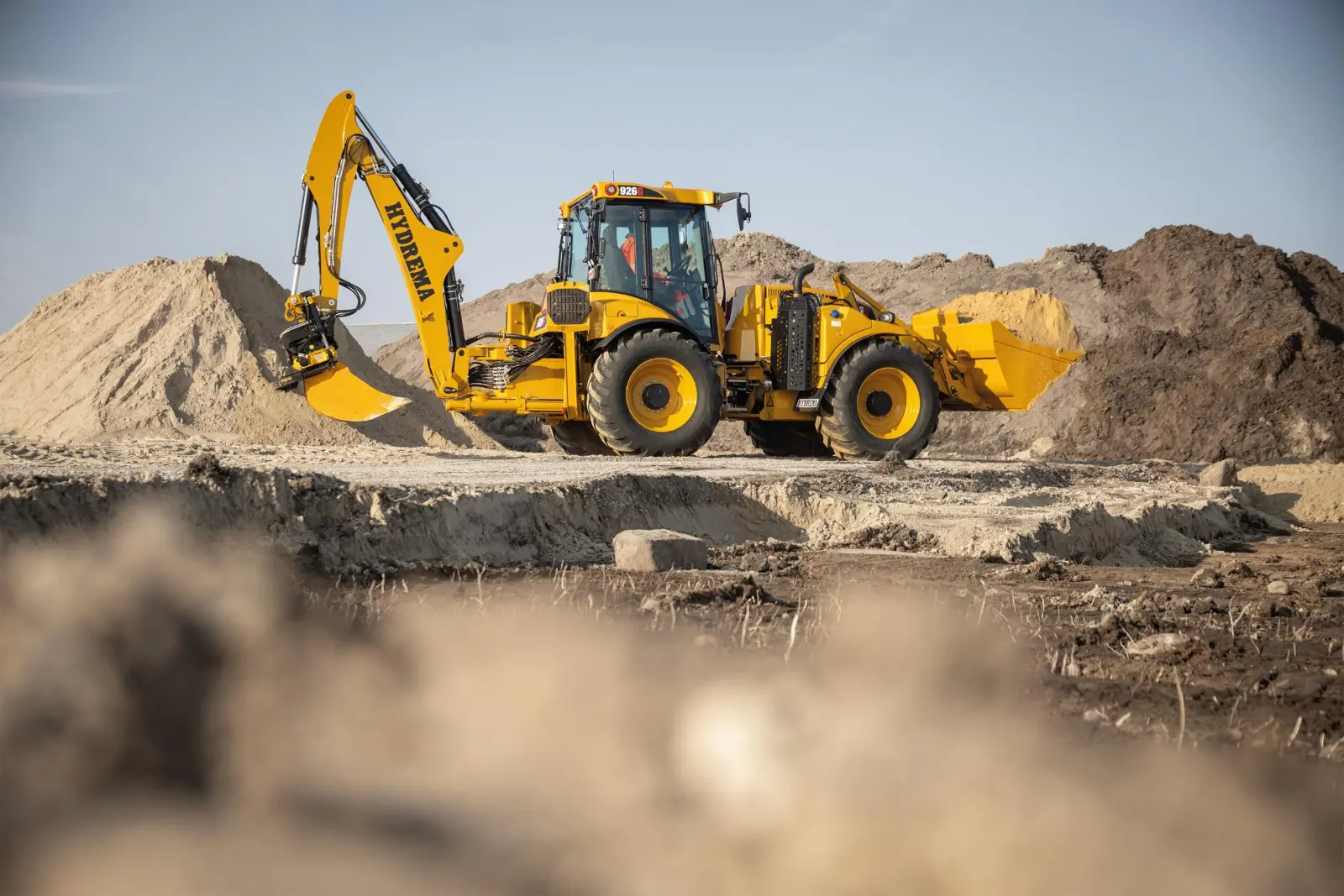
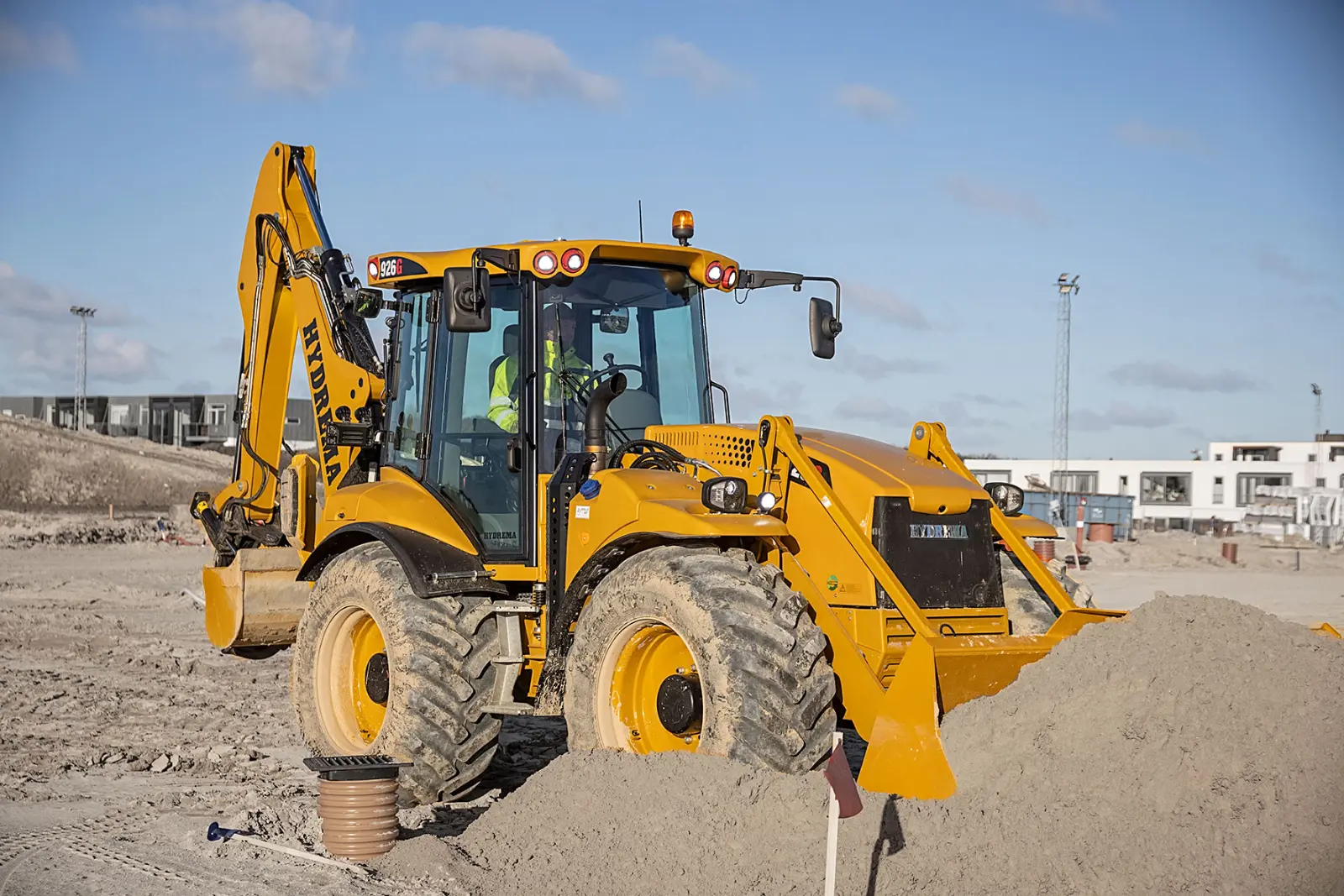
Backhoe loaders: The 906G delivers up to 165 l/min at 240 bar. Its Double Command System with Flow Sharing splits the flow between functions, and the hydraulic sideshift gives a 280° working range.
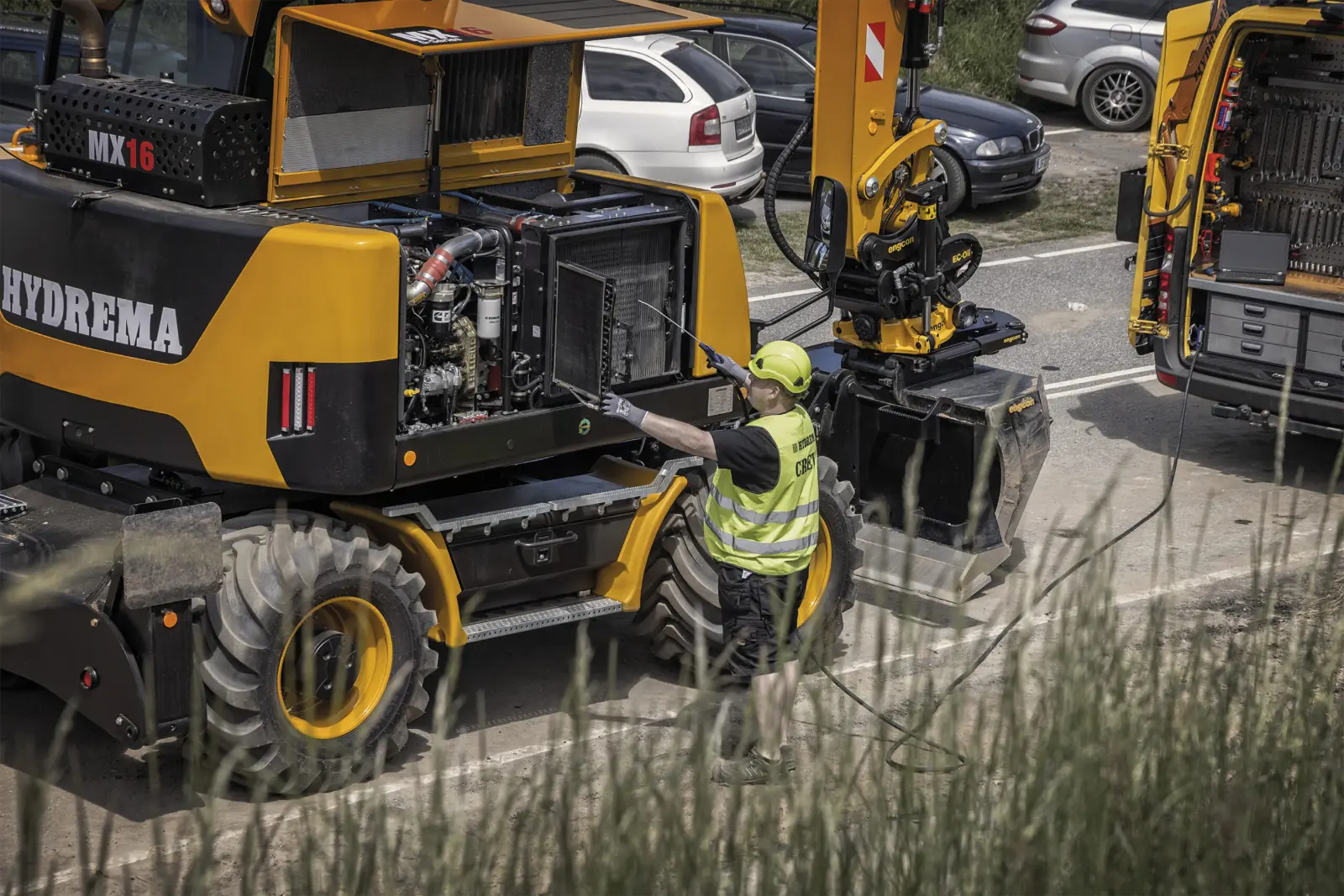
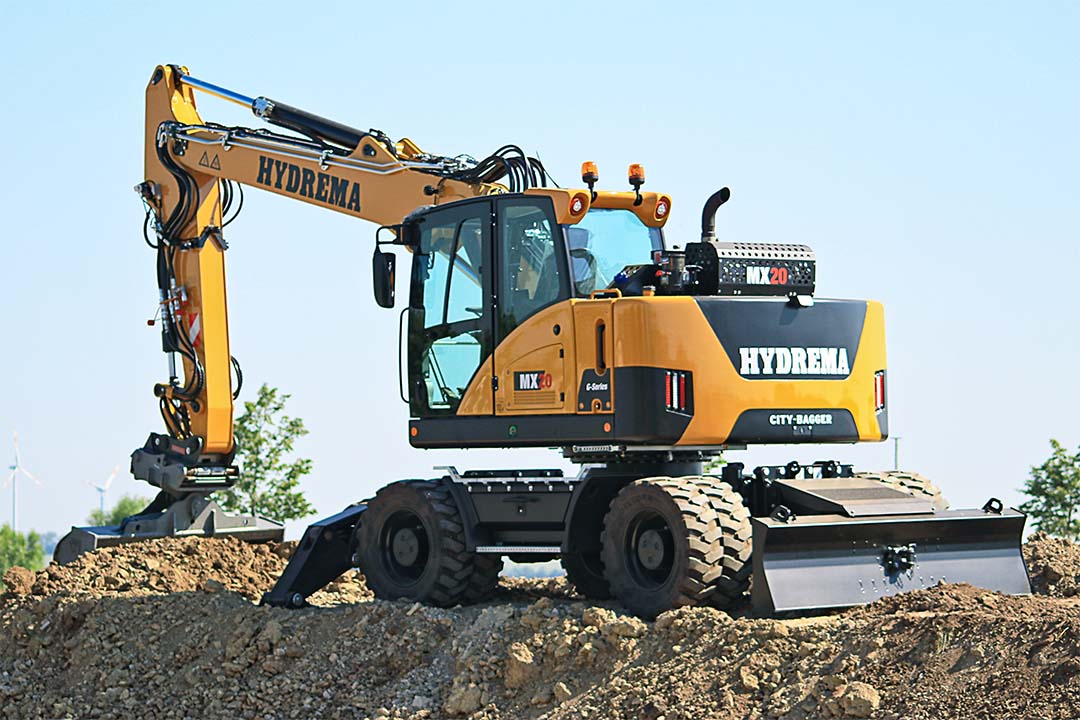
Wheeled excavators: The MX17G runs a dual-circuit load sensing system at 350 bar and three adjustable auxiliary circuits (up to 200 l/min) for tiltrotators and other attachments.
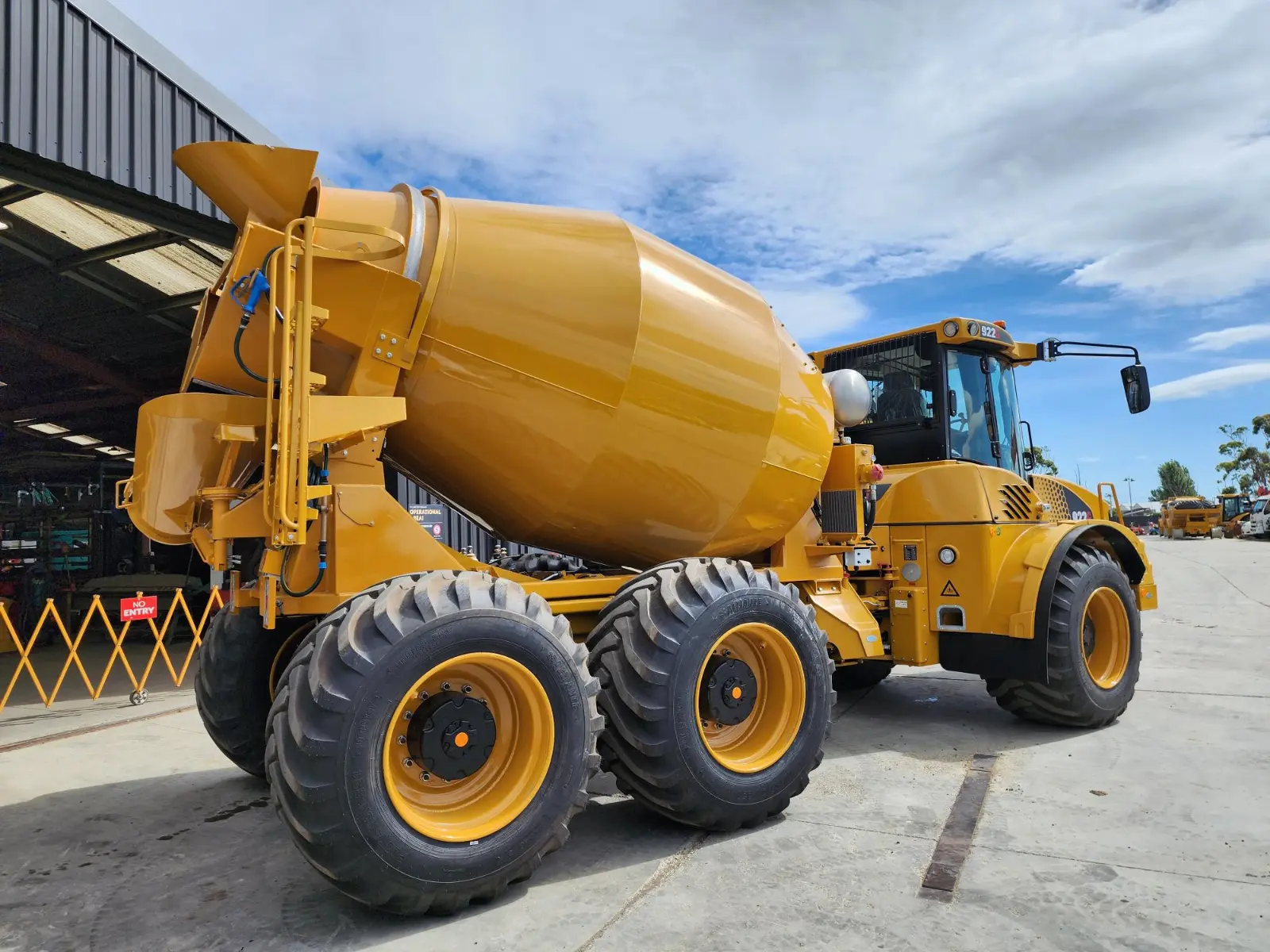
Dump trucks: The 922G uses five pumps: steering, tipping, brakes and stabilisers, a hydraulic retarder and emergency steering each have their own supply. The 707G and 912G use a priority valve so steering always has oil, and hydraulic stabilisers keep the machine level when tipping.
Hydraulic vs. hydrostatic: what is the difference?
Hydrostatic is one way of using hydraulics: a pump drives a hydraulic motor in a closed loop to move the machine. All hydrostatic drives are hydraulic, but most hydraulic systems on a machine are for working functions, not driving. See What is Hydrostatic Transmission?.
Reviewed by Dennis Vesterbæk Hampe, Director of Global Marketing, Hydrema · Last reviewed: 6 November 2026