ROPS means Roll-Over Protective Structure. FOPS means Falling Object Protective Structure. Both are parts of a machine’s cab or frame that are tested to keep a survival space around the operator: ROPS if the machine rolls over, FOPS if rocks, branches or debris hit the roof.
What does FOPS mean?
FOPS stands for Falling Object Protective Structure. It is a roof structure tested by dropping a heavy weight on it. The structure may deform, but it must not enter the space where the operator sits.
What is the difference between ROPS and FOPS?
ROPS
FOPS
Protects against
Roll-over
Falling objects from above
Main standard (earth-moving machinery)
ISO 3471
ISO 3449
How it is tested
Side, vertical and longitudinal loads on the cab frame
A weight is dropped on the roof
Requires a seat belt to work
Yes
No
A cab can be certified for both. That is common on dump trucks and backhoe loaders.
What are FOPS Level I and Level II?
ISO 3449 has two levels. Level I covers small objects such as bricks or small rocks and is tested with a drop energy of 1,365 J. Level II covers heavy objects and is tested with 11,600 J. Level II is required in demolition, forestry and quarry work where large objects can fall.
Is ROPS the same for excavators?
No. Excavators are tested to their own standards. ISO 12117-2 covers roll-over protection for excavators over 6 tonnes, and ISO 10262 covers operator protective guards (OPG) on the front and top of the cab.
Why must you wear a seat belt in a ROPS cab?
ROPS only protects the operator inside the cab’s survival space. Without a seat belt, the operator can be thrown out of the cab or against the structure during a roll-over. That is why ROPS machines always have a seat belt, and why using it is mandatory on most sites.
How ROPS/FOPS is integrated into Hydrema machines
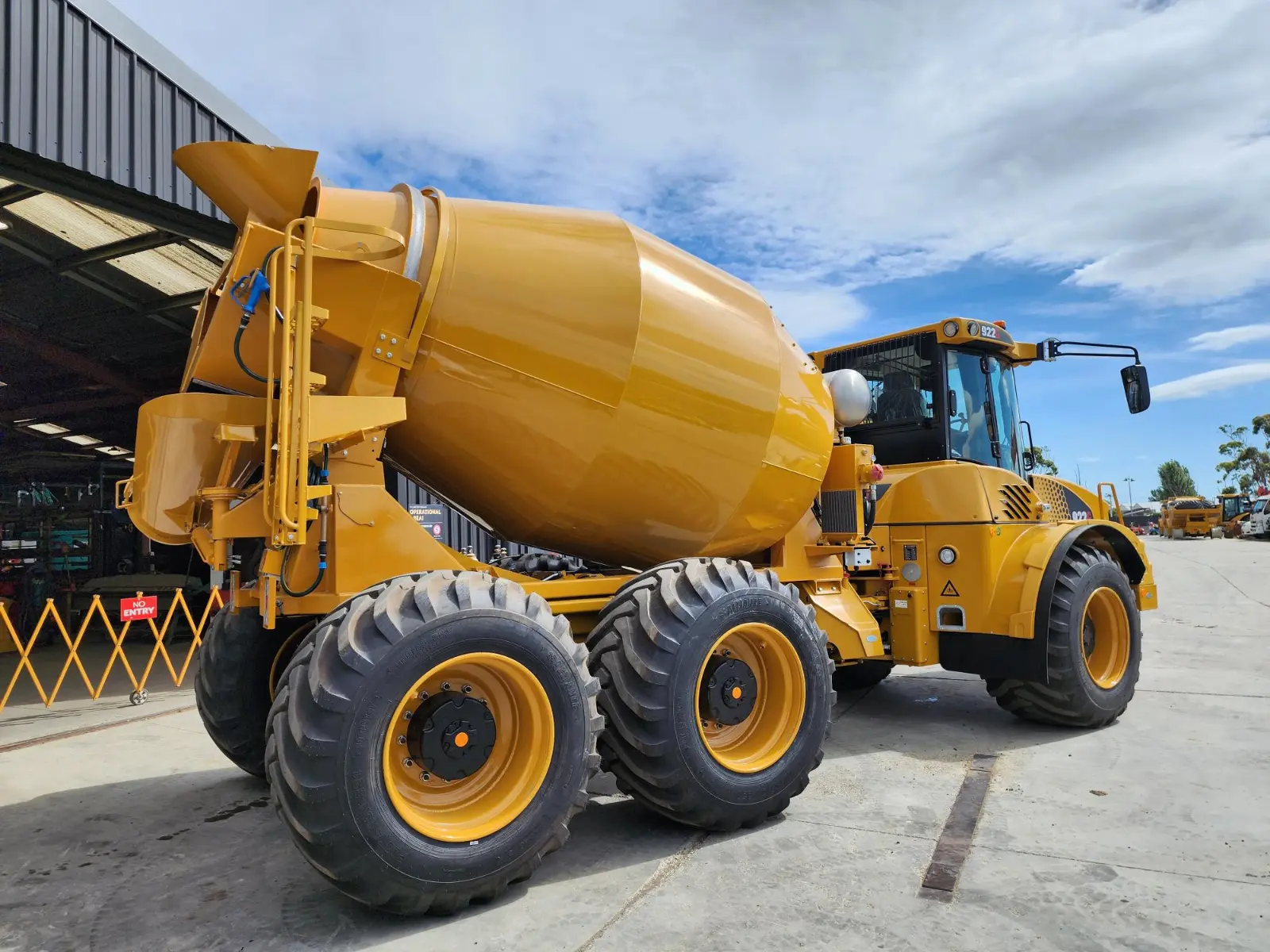
Dump trucks: The cabs on the 707G, 912G, 922G and DT6 are ROPS/FOPS certified.
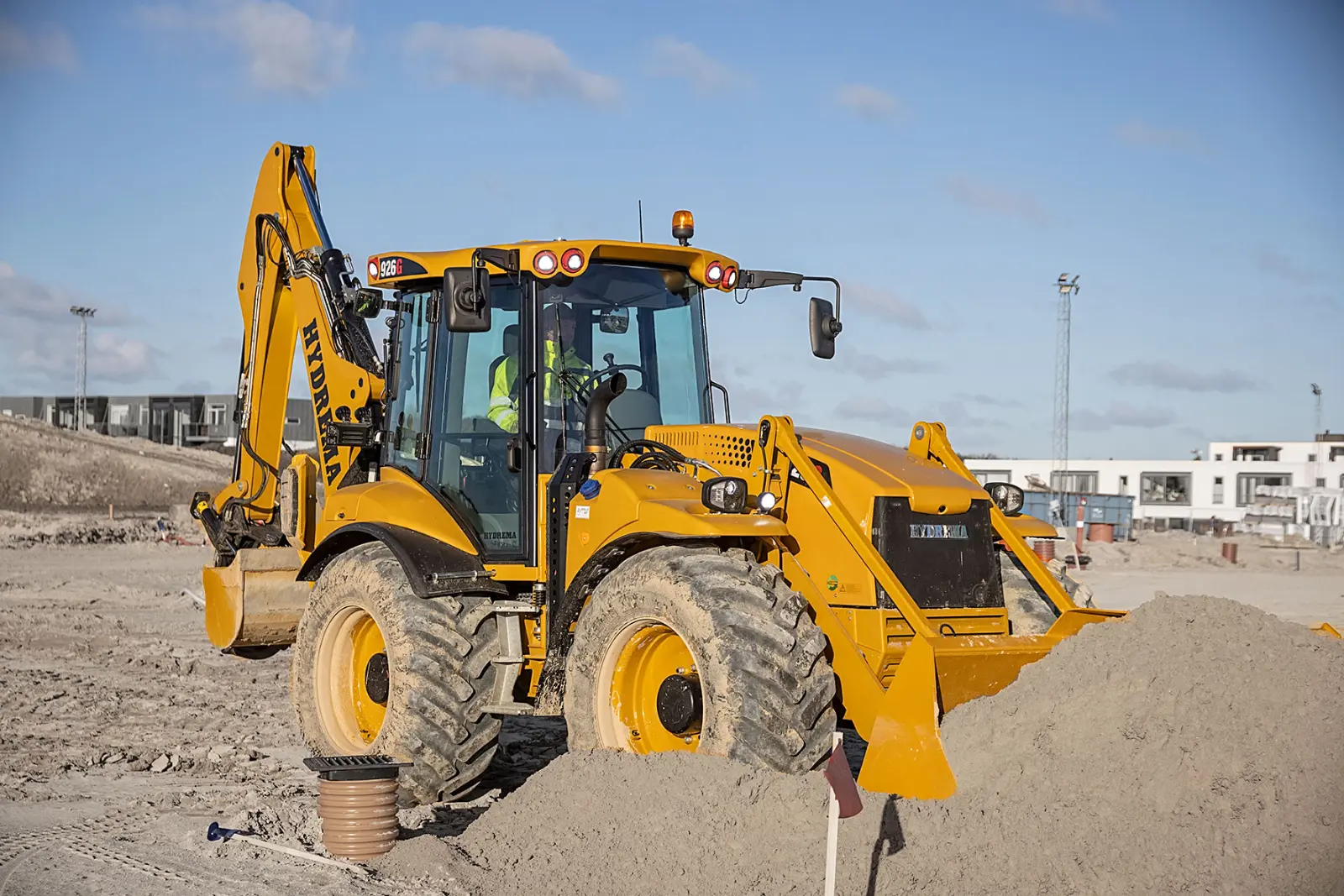
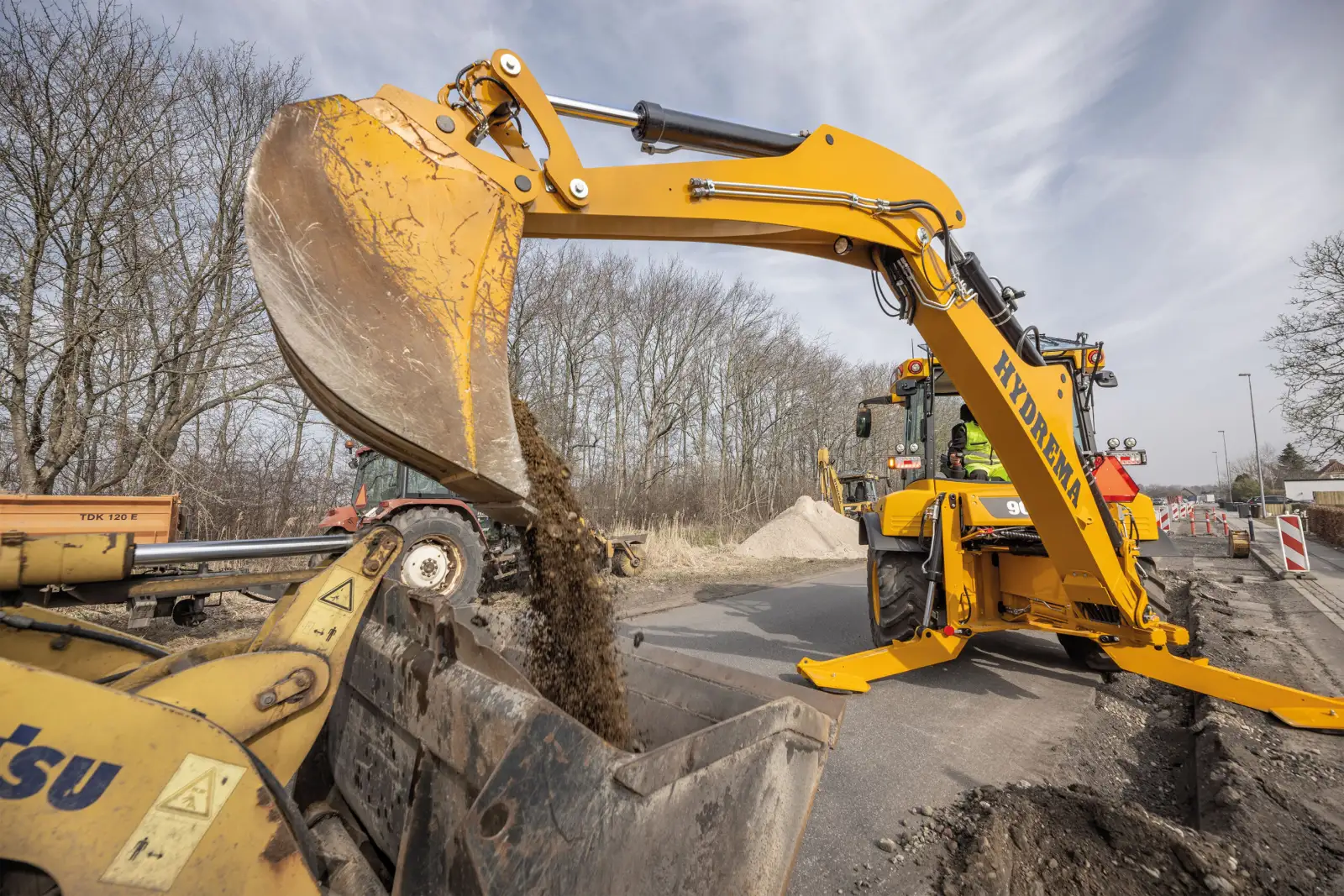
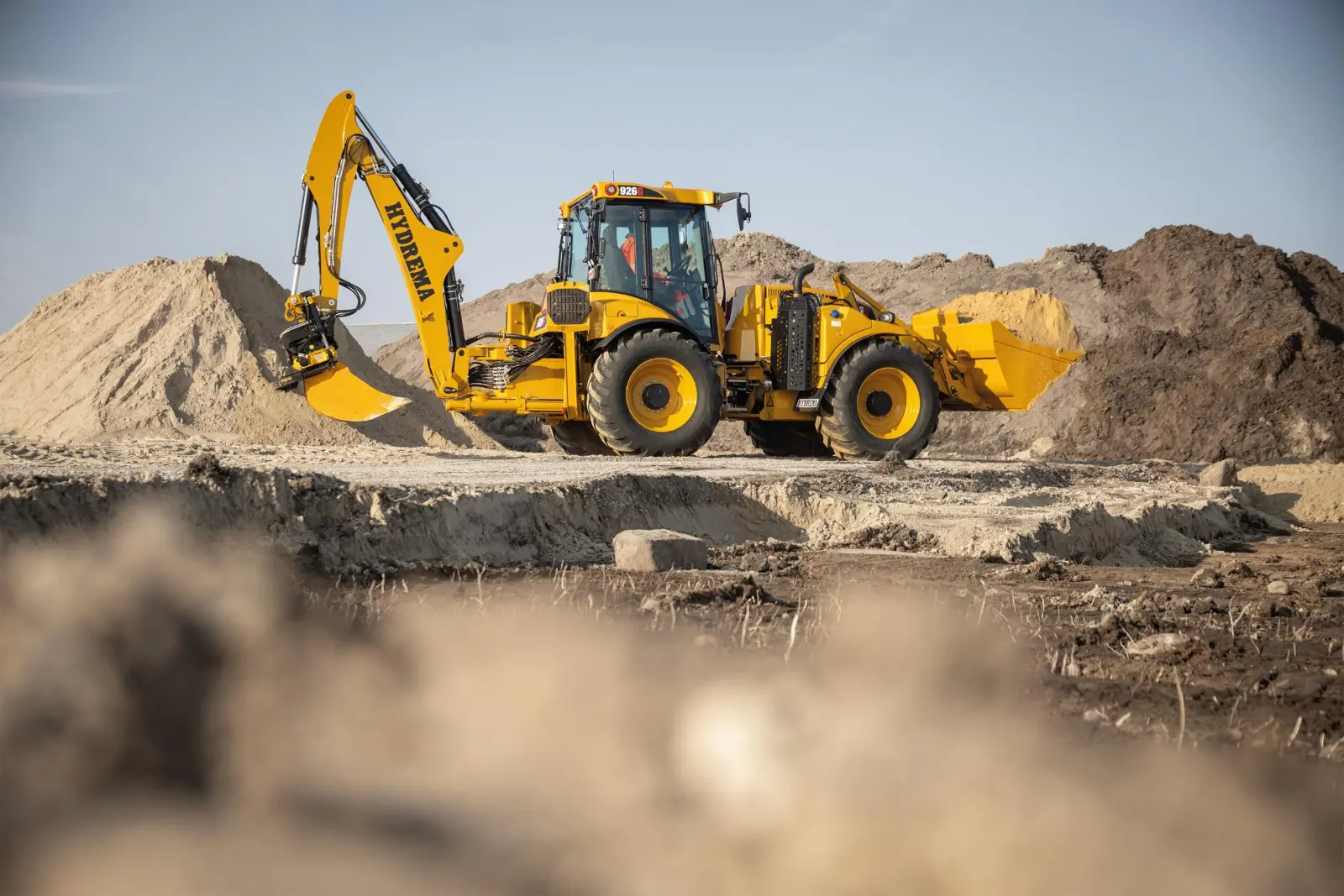
Backhoe loaders: The 906G and 926G have ROPS/FOPS approved cabs.
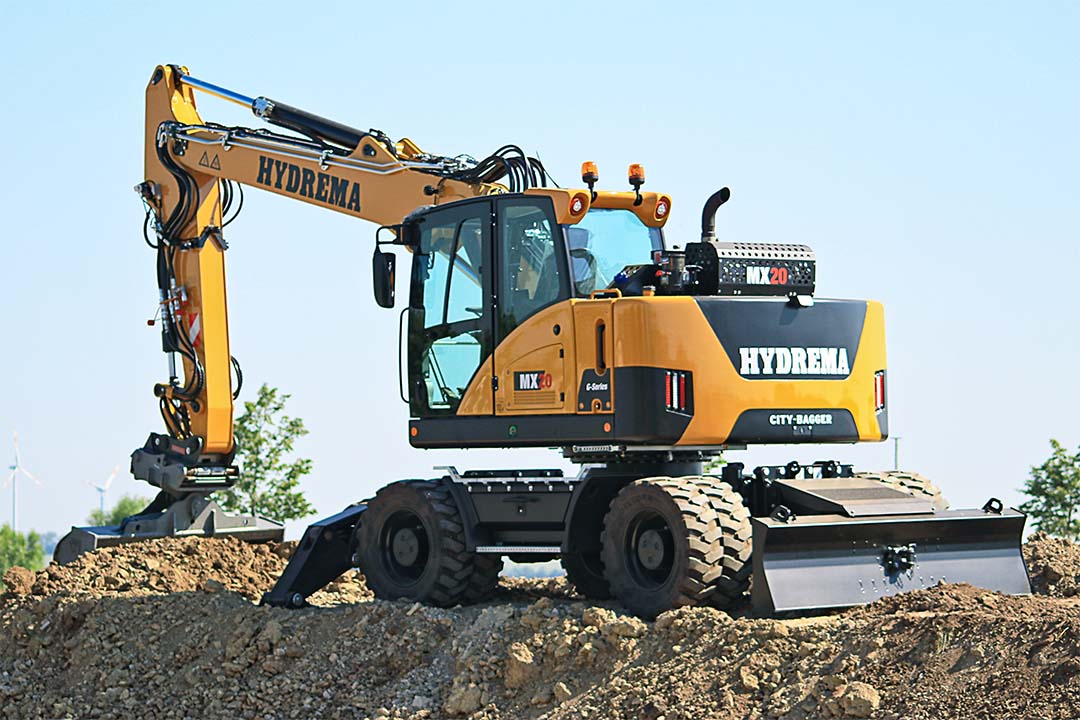
Wheeled excavators: The MX17G and the other MX models have ROPS certified cabs.
Certification is part of the CE conformity of each machine. Retrofitting or drilling into a certified cab can void the certification, so changes should be approved by the manufacturer.
Reviewed by Dennis Vesterbæk Hampe, Director of Global Marketing, Hydrema · Last reviewed: 6 November 2026