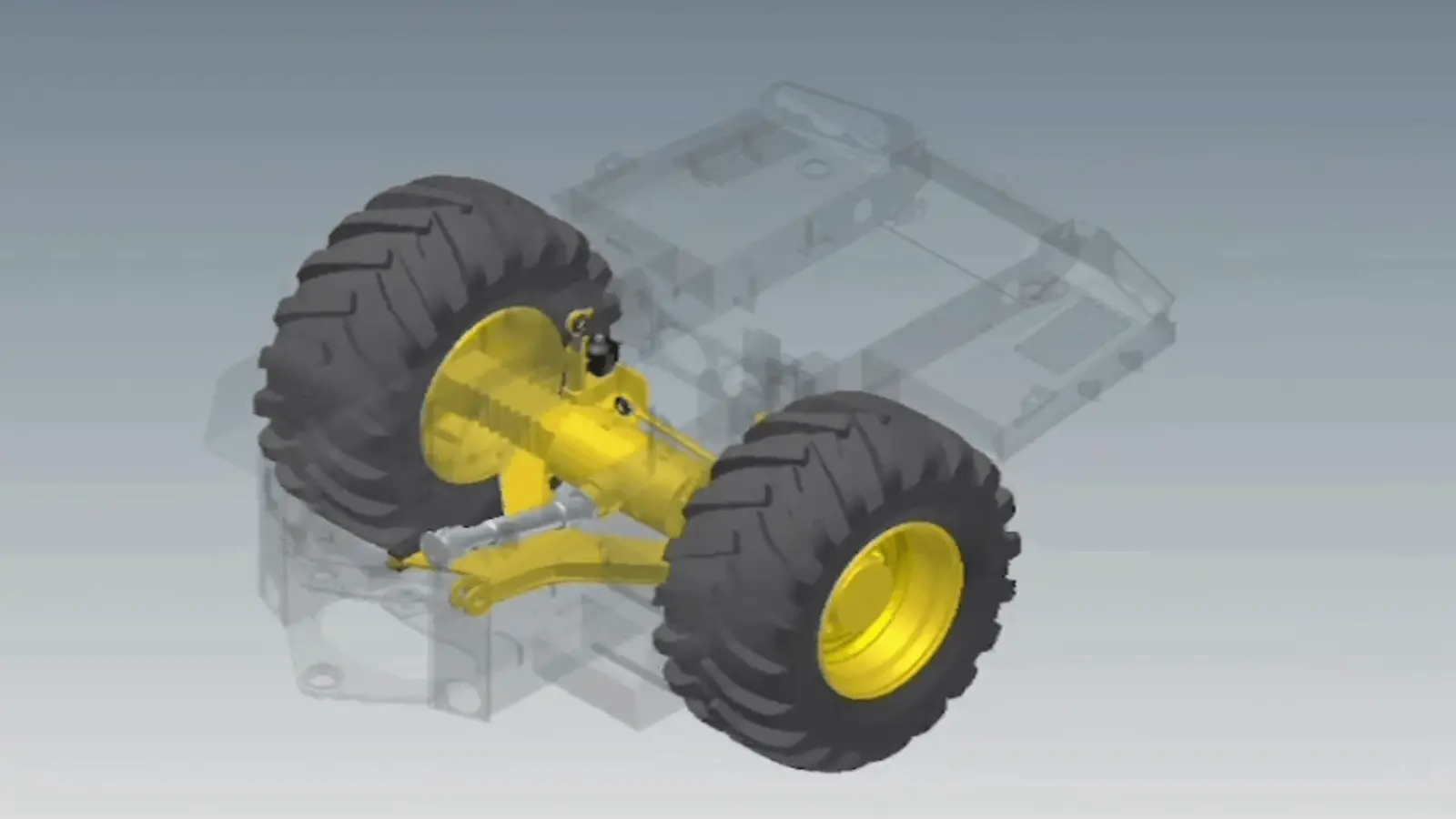
High rail and low rail are the two ways a road-rail machine can run on a railway track. In high rail, the rubber tyres drive steel rail wheels, and the machine rides more than 100 mm above the rails. In low rail, the rubber tyres run directly on the rails for maximum traction, while the rail wheels only guide the machine.
What is a road-rail machine?
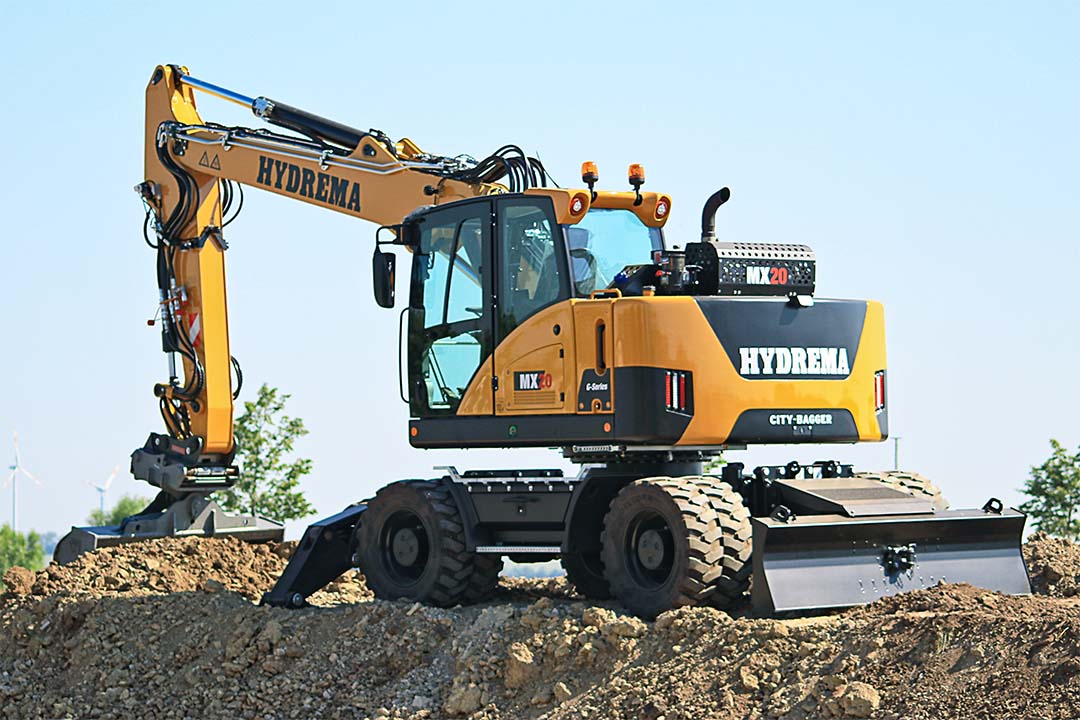
A road-rail machine drives on normal tyres to the work site, then lowers guide wheels and drives along the track. Common types are road-rail excavators (Zweiwegebagger in German, pelle rail-route in French) and road-rail dump trucks. In Europe they are approved under EN 15746 and national railway rules.
What is the difference between high rail and low rail?
High rail
Low rail
What touches the rail
Steel rail wheels only
Rubber tyres plus guiding rail wheels
How traction and braking work
Tyres drive the rail wheels, which carry the machine
Tyres drive and brake directly on the rail head
Height above the rails
More than 100 mm
Tyres on the rails
Best for
Passing switches, sensors and level crossings, stable lifting
Pulling or pushing heavy loads, gradients, wet rails
When do you use high rail and when low rail?
High rail keeps the machine clear of signalling equipment, switches and track sensors, and gives a stable base for lifting. Low rail gives more grip because rubber has more friction on steel than a steel wheel. It is the better choice for hauling wagons or working on slopes and in wet conditions.
What does “hi-rail” mean in the US?
In North America, “hi-rail” or “high-rail” is often used for any road-rail vehicle, such as a pickup or crane truck fitted with rail guide wheels. In European machine specifications, high rail and low rail describe the two operating modes above.
High rail and low rail in Hydrema machines
MX17G Rail and MX20G Rail: road-rail excavators for standard gauge (1,435 mm) that switch between high rail and low rail. The rail wheels are 650 mm in diameter with individual disc brakes. Rail mode speed is up to 20 km/h, and the system monitors both modes with alarms. The compact superstructure of the MX17G Rail lets it work on one track while trains run on the next.
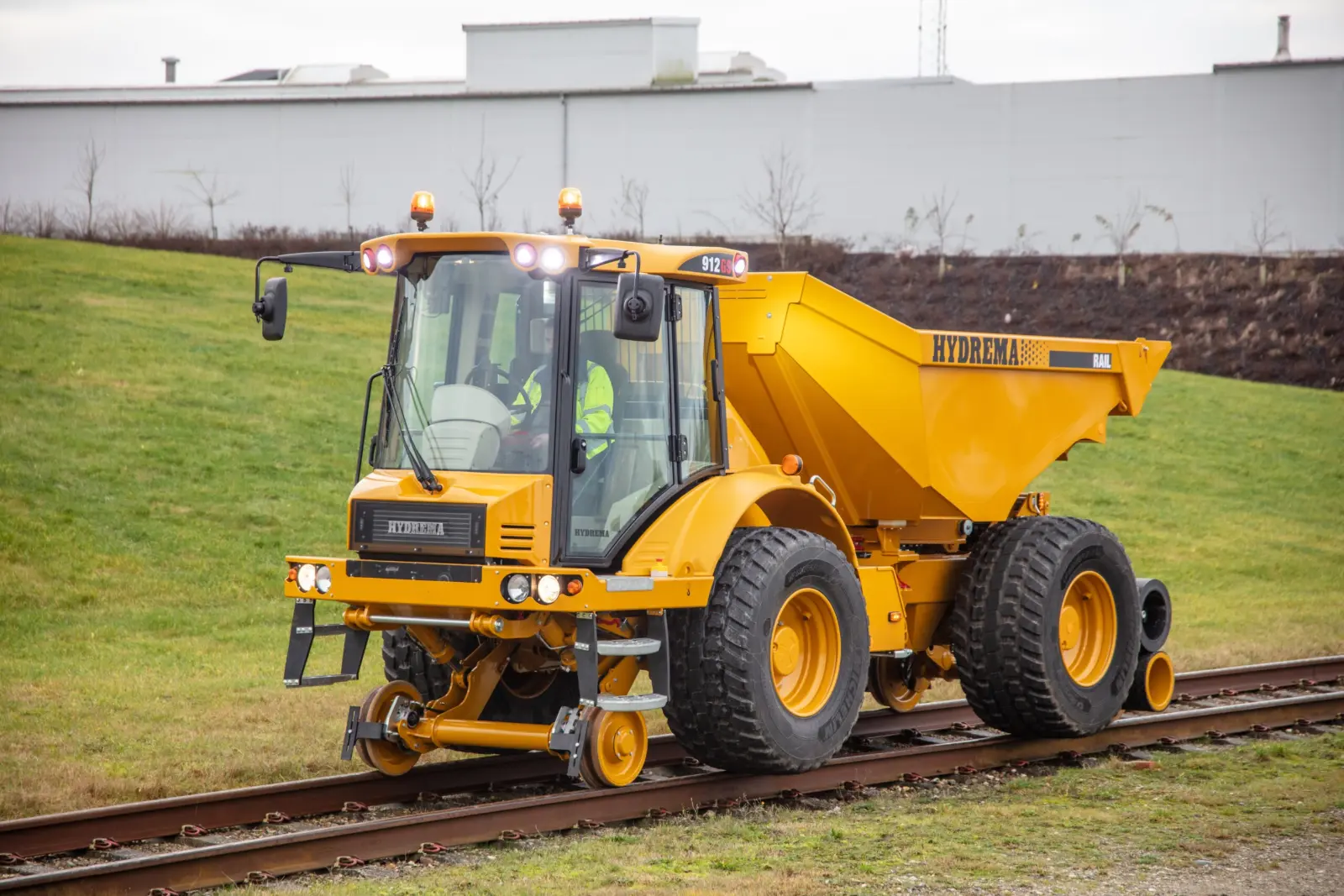
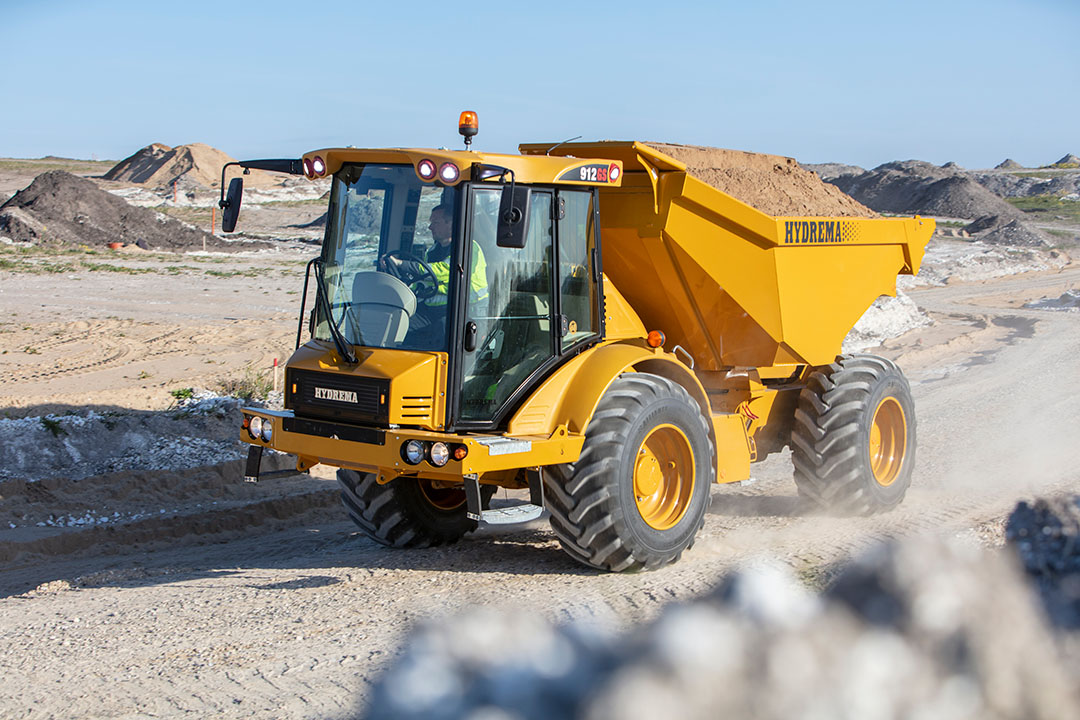
912GS Rail: a 10-tonne road-rail dump truck with MultiTip 180° tipping. The rail wheels are removable, so it can be converted back to a standard 912GS. The oscillation in the centre joint locks automatically on rails.